
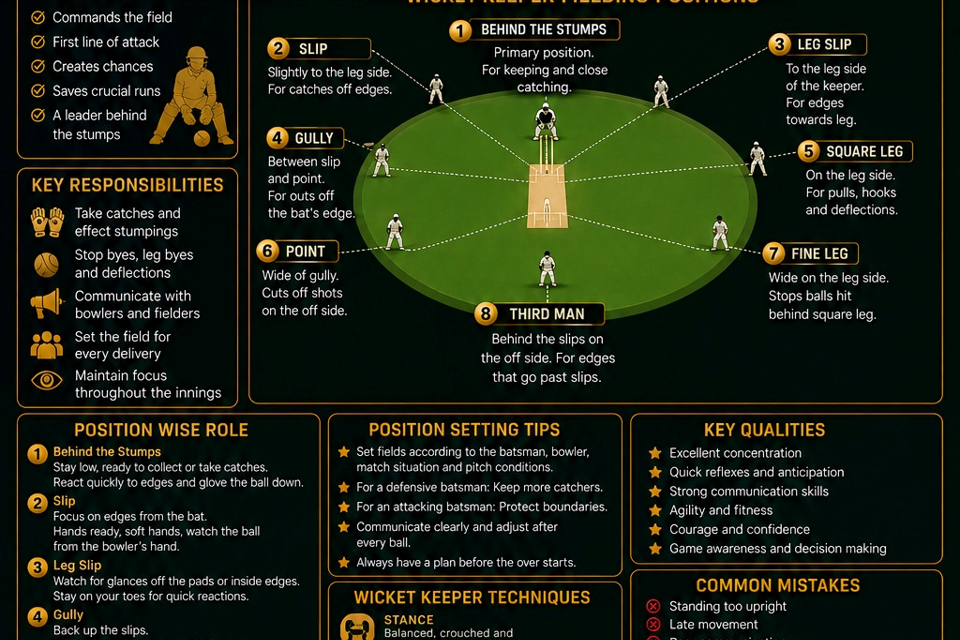
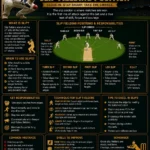
The wicketkeeper is one of the most important players in a cricket team. Positioned behind the stumps, the wicketkeeper is involved in almost every delivery and often becomes the leader of the fielding unit. The role is much more than simply catching the ball. A wicketkeeper must collect deliveries, complete stumpings, take edges, stop byes, communicate with the bowler, and help organise field placements.
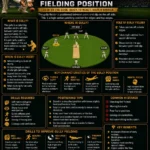
The main wicketkeeping position is directly behind the stumps. The distance depends on the bowler’s pace, pitch, and batter. Against spin bowling, the keeper may stand close to the stumps to create stumping opportunities. Against fast bowling, the keeper usually stands farther back to allow more reaction time. The wicketkeeper also works closely with slip, leg slip, gully, square leg, point, and third man.
A wicketkeeper must have excellent concentration because the ball may change direction after touching the bat, pitch, gloves, or pads. The keeper should remain balanced, crouched, and ready to move in either direction. Small side steps are usually more effective than large movements because they help the keeper stay aligned with the ball. The head should remain steady, and the eyes must follow the ball until it reaches the gloves.
Gloving technique is a key skill. The hands should be soft and relaxed, allowing the ball to settle into the gloves. The keeper should avoid snatching at the ball or closing the gloves too early. When collecting low deliveries, the body should move behind the ball whenever possible. This creates a second line of protection and reduces the chance of missed balls reaching the boundary.
Communication makes the wicketkeeper a natural leader. The keeper has a clear view of the field and can guide the bowler and fielders between deliveries. Training should include glove work, reaction drills, footwork exercises, stumpings, takes from spin bowling, and catching practice. Common mistakes include standing too upright, moving late, using hard hands, and failing to communicate.
A dependable wicketkeeper combines technique, fitness, courage, and awareness. Every catch, stumping, stop, and call can influence the result of a match. With regular practice and a strong understanding of fielding positions, young wicketkeepers can become confident players who support both the bowling attack and the entire team.






Recent Comments